• Skip to primary navigation
  • Skip to main content
  • Skip to primary sidebar
  • Skip to secondary sidebar
  • About
    • Contact
    • Privacy
    • Terms of use
  • Advertise
    • Advertising
    • Case studies
    • Design
    • Email marketing
    • Features list
    • Lead generation
    • Magazine
    • Press releases
    • Publishing
    • Sponsor an article
    • Webcasting
    • Webinars
    • White papers
    • Writing
  • Subscribe to Newsletter

Robotics & Automation News

Where Innovation Meets Imagination

  • Home
  • News
  • Features
  • Editorial Sections A-Z
    • Agriculture
    • Aircraft
    • Artificial Intelligence
    • Automation
    • Autonomous Vehicles
    • Business
    • Computing
    • Construction
    • Culture
    • Design
    • Drones
    • Economy
    • Energy
    • Engineering
    • Environment
    • Health
    • Humanoids
    • Industrial robots
    • Industry
    • Infrastructure
    • Investments
    • Logistics
    • Manufacturing
    • Marine
    • Material handling
    • Materials
    • Mining
    • Promoted
    • Research
    • Robotics
    • Science
    • Sensors
    • Service robots
    • Software
    • Space
    • Technology
    • Transportation
    • Warehouse robots
    • Wearables
  • Press releases
  • Events

Why Safety Relays Are the Unsung Heroes of Modern Industrial Automation

August 12, 2025 by Mai Tao

In a modern factory, where robots work alongside humans and massive conveyor systems operate at high speeds, safety is paramount.

But have you ever stopped to consider how all these machines know when to stop? More often than not, the unsung hero behind this seamless operation is a humble device known as a safety relay.

Imagine this: a worker inadvertently opens a safety gate while a machine is running. In that split second, a safety relay detects the breach and cuts the power, preventing potential harm.

This process plays out thousands of times a day in factories worldwide, without anyone noticing, because no accidents occurred.

What Exactly Does a Safety Relay Do?

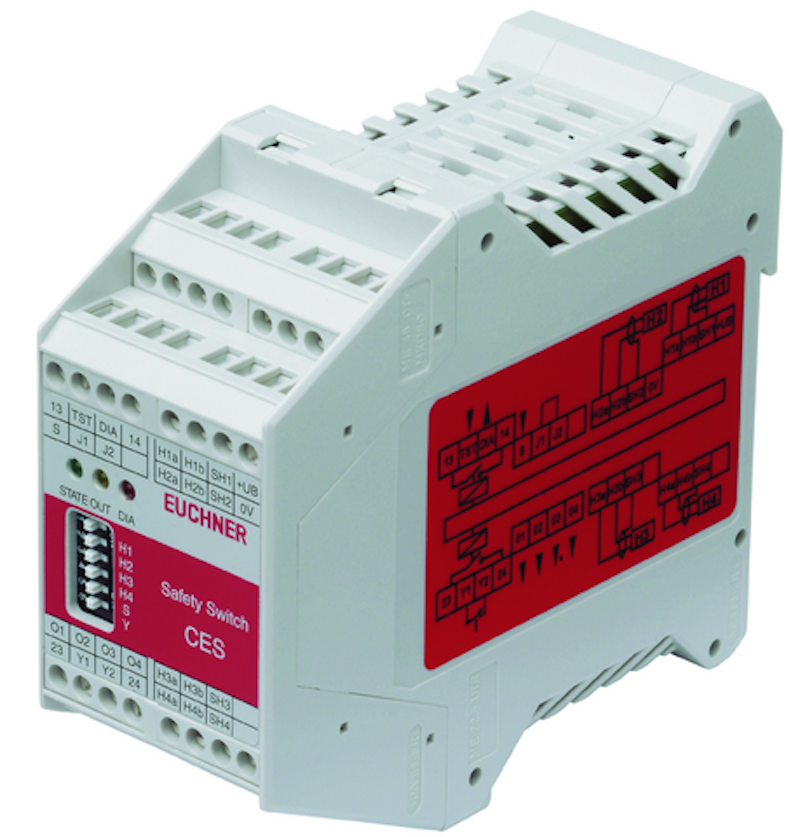
At its core, a safety relay is designed to monitor and control safety functions in industrial settings.

It isn’t just a simple on/off switch. It’s a sophisticated device that manages multiple safety circuits simultaneously, monitors its own performance, and ensures that everything runs smoothly.

Safety relays have built-in redundancy, meaning they have dual inputs and outputs to safeguard against failure. If something goes wrong within the system, the relay will default to a safe state rather than allowing a potentially dangerous malfunction.

Their job is to make sure that if anything goes wrong – whether a malfunction or human error – it triggers a safe shutdown.

More Than Just a Switch: The Technical Edge

Modern safety relays are much more than simple fail-safes. They have internal logic and monitoring features that ensure the system is always functioning correctly. They constantly perform diagnostic checks on themselves, verifying everything from coil faults to the integrity of their contacts.

What makes them so effective is their ability to detect discrepancies. For example, they check for any faults or short circuits between channels, ensuring that no single fault can jeopardise the safety of the system.

Additionally, some safety relays are capable of performing advanced functions like detecting a guard door being opened and locking down power to prevent any accidental operation.

But it’s not just machinery that safety relays protect – they protect people, too. As humans, we can be unpredictable. People forget procedures, make mistakes, or become distracted.

That’s why a safety relay ensures that even in those moments of lapse, the system still behaves safely. They enforce “forced guidance,” a design feature that makes it impossible to bypass safety protocols accidentally.

Redundancy and Reliability: The Backbone of Safety

A key feature of safety relays is their redundancy. The devices are built with multiple safety channels, meaning that even if one channel fails, the other is there to take over.

This redundancy is a critical part of ensuring that even if something goes wrong within the relay, the system will still default to the safest possible state.

Modern relays also have the ability to monitor and communicate with other safety devices in the system. This communication helps to ensure that every device – from the safety gates to the machines themselves – is operating correctly.

It also allows for advanced diagnostics, meaning that operators can quickly spot any faults in the system before they turn into bigger issues.

When to Use a Safety Relay vs. a Safety PLC

While safety relays are a fantastic solution for many applications, there are situations where a Safety PLC might be a better choice. The difference lies in the complexity of the system.

Safety relays are ideal for simpler, smaller applications with fewer safety functions. For example, if you have a couple of E-Stops and guard doors on a single machine, a safety relay will do the job effectively and economically.

They’re easy to wire, cost-effective, and quick to implement. They are also perfect for retrofitting existing equipment with safety features.

On the other hand, a Safety PLC offers a much higher degree of flexibility and is better suited for complex, interconnected systems. These systems are typically used in large, automated facilities where multiple machines and devices need to communicate and work together.

Safety PLCs offer the ability to integrate advanced diagnostics, control multiple safety zones, and handle complex logic.

The Importance of Preventative Safety

Accidents in the workplace come with a hefty price tag – from medical bills to insurance claims, production downtime, and potential lawsuits. Safety relays provide an economic solution by preventing accidents before they happen, ultimately saving money.

They are cost-effective insurance that can keep businesses running smoothly by mitigating the risks that come with industrial operations.

But the savings aren’t just financial. The peace of mind that comes with knowing your systems are secure is invaluable. When managers know that their safety systems are reliable, they can focus on improving productivity and efficiency without worrying about catastrophic failures.

A Glimpse into the Future

As factories become more connected and data-driven, safety relays are evolving. Newer models are incorporating more advanced diagnostic capabilities, predictive maintenance features, and greater integration with plant-wide management systems.

Despite these advances, safety relays continue to do what they’ve always done best: keeping people safe while allowing industry to move forward.

In conclusion, the next time you see a product that’s been manufactured in a modern facility, remember that behind the scenes, a safety relay has been quietly standing guard, ensuring that everyone goes home safely at the end of the day.

It might not get the spotlight, but it’s essential to keeping the industry running smoothly.

Print Friendly, PDF & Email

Share this:

  • Click to print (Opens in new window) Print
  • Click to share on Facebook (Opens in new window) Facebook
  • Click to share on LinkedIn (Opens in new window) LinkedIn
  • Click to share on Reddit (Opens in new window) Reddit
  • Click to share on X (Opens in new window) X
  • Click to share on Tumblr (Opens in new window) Tumblr
  • Click to share on Pinterest (Opens in new window) Pinterest
  • Click to share on WhatsApp (Opens in new window) WhatsApp
  • Click to share on Telegram (Opens in new window) Telegram
  • Click to share on Pocket (Opens in new window) Pocket

Related stories you might also like…

Filed Under: Engineering Tagged With: factory automation, industrial automation safety, industrial safety systems, machine guarding, machine safety devices, redundancy in safety systems, safety plc vs safety relay, safety relay functions, safety relays, workplace safety

Primary Sidebar

Search this website

Latest articles

  • Construction and demolition robots: Building the future
  • Robotics Rising: What Hiring Trends Reveal About Automation Careers
  • Xpanner launches ‘first’ scalable physical AI-based automation solution for construction sites
  • Skelex starts exoskeleton pilot in greenhouses in the Netherlands
  • Humanoid Global makes ‘software investment’ in RideScan
  • $50 million funding sparks ‘manufacturing technology breakthroughs‘ in Ontario
  • Wachendorff expands range of IO-Link encoders
  • Robotics survey highlights autonomy, digital twins, humanoids and ethics as key 2025 trends
  • ABB to implement gearless mill drive service program at Codelco copper mines in Chile
  • Systraplan unveils new automatic tread booking systems for tyre manufacturing

Secondary Sidebar

Copyright © 2025 · News Pro on Genesis Framework · WordPress · Log in

We use cookies on our website to give you the most relevant experience by remembering your preferences and repeat visits. By clicking “Accept”, you consent to the use of ALL the cookies.
Do not sell my personal information.
Cookie SettingsAccept
Manage consent

Privacy Overview

This website uses cookies to improve your experience while you navigate through the website. Out of these, the cookies that are categorized as necessary are stored on your browser as they are essential for the working of basic functionalities of the website. We also use third-party cookies that help us analyze and understand how you use this website. These cookies will be stored in your browser only with your consent. You also have the option to opt-out of these cookies. But opting out of some of these cookies may affect your browsing experience.
Necessary
Always Enabled
Necessary cookies are absolutely essential for the website to function properly. These cookies ensure basic functionalities and security features of the website, anonymously.
CookieDurationDescription
cookielawinfo-checkbox-analytics11 monthsThis cookie is set by GDPR Cookie Consent plugin. The cookie is used to store the user consent for the cookies in the category "Analytics".
cookielawinfo-checkbox-functional11 monthsThe cookie is set by GDPR cookie consent to record the user consent for the cookies in the category "Functional".
cookielawinfo-checkbox-necessary11 monthsThis cookie is set by GDPR Cookie Consent plugin. The cookies is used to store the user consent for the cookies in the category "Necessary".
cookielawinfo-checkbox-others11 monthsThis cookie is set by GDPR Cookie Consent plugin. The cookie is used to store the user consent for the cookies in the category "Other.
cookielawinfo-checkbox-performance11 monthsThis cookie is set by GDPR Cookie Consent plugin. The cookie is used to store the user consent for the cookies in the category "Performance".
viewed_cookie_policy11 monthsThe cookie is set by the GDPR Cookie Consent plugin and is used to store whether or not user has consented to the use of cookies. It does not store any personal data.
Functional
Functional cookies help to perform certain functionalities like sharing the content of the website on social media platforms, collect feedbacks, and other third-party features.
Performance
Performance cookies are used to understand and analyze the key performance indexes of the website which helps in delivering a better user experience for the visitors.
Analytics
Analytical cookies are used to understand how visitors interact with the website. These cookies help provide information on metrics the number of visitors, bounce rate, traffic source, etc.
Advertisement
Advertisement cookies are used to provide visitors with relevant ads and marketing campaigns. These cookies track visitors across websites and collect information to provide customized ads.
Others
Other uncategorized cookies are those that are being analyzed and have not been classified into a category as yet.
SAVE & ACCEPT